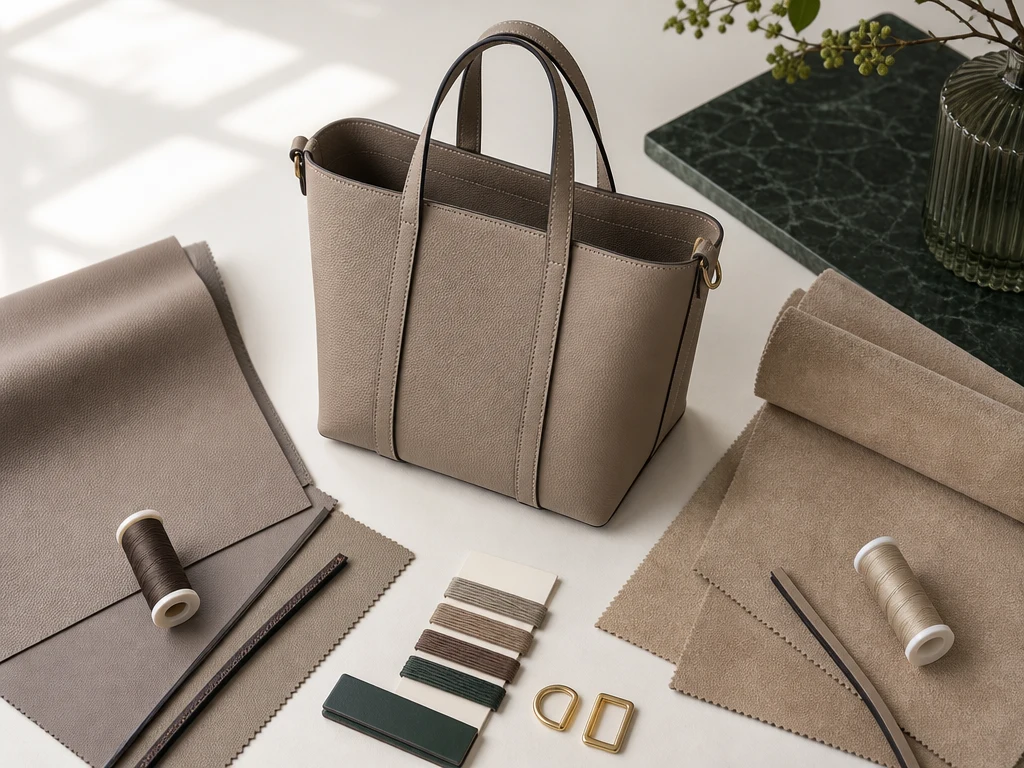
Ask for the exact material description and approve it in a finished sample. Marketing labels alone do not confirm composition, durability or care behavior.
Use this guide alongside Materials and craft when choosing the initial direction. The Handbag packaging planning page covers the next specification or development layer.
Compare surface hand feel and visual effect
Smooth and pebbled directions show a defined face, while suede-look surfaces use a soft pile that changes shade with touch and direction.
Surface choice changes the mood of the bag and how handling marks appear. The buyer should approve color and panel direction under consistent lighting.
- Record the supplier material code and surface description.
- Review pile direction across panels.
- Check color from multiple viewing angles.
Review structure, drape and cleaning considerations
Surface appearance does not determine the finished structure; backing, thickness, reinforcement and lining also matter.
Suede-look materials can communicate softness, but the bag may still be structured. Cleaning guidance and resistance claims must come from the selected material source, not from appearance.
- Test the material in the intended silhouette.
- Avoid unsupported durability or cleaning claims.
- Review surface change after normal sample handling.
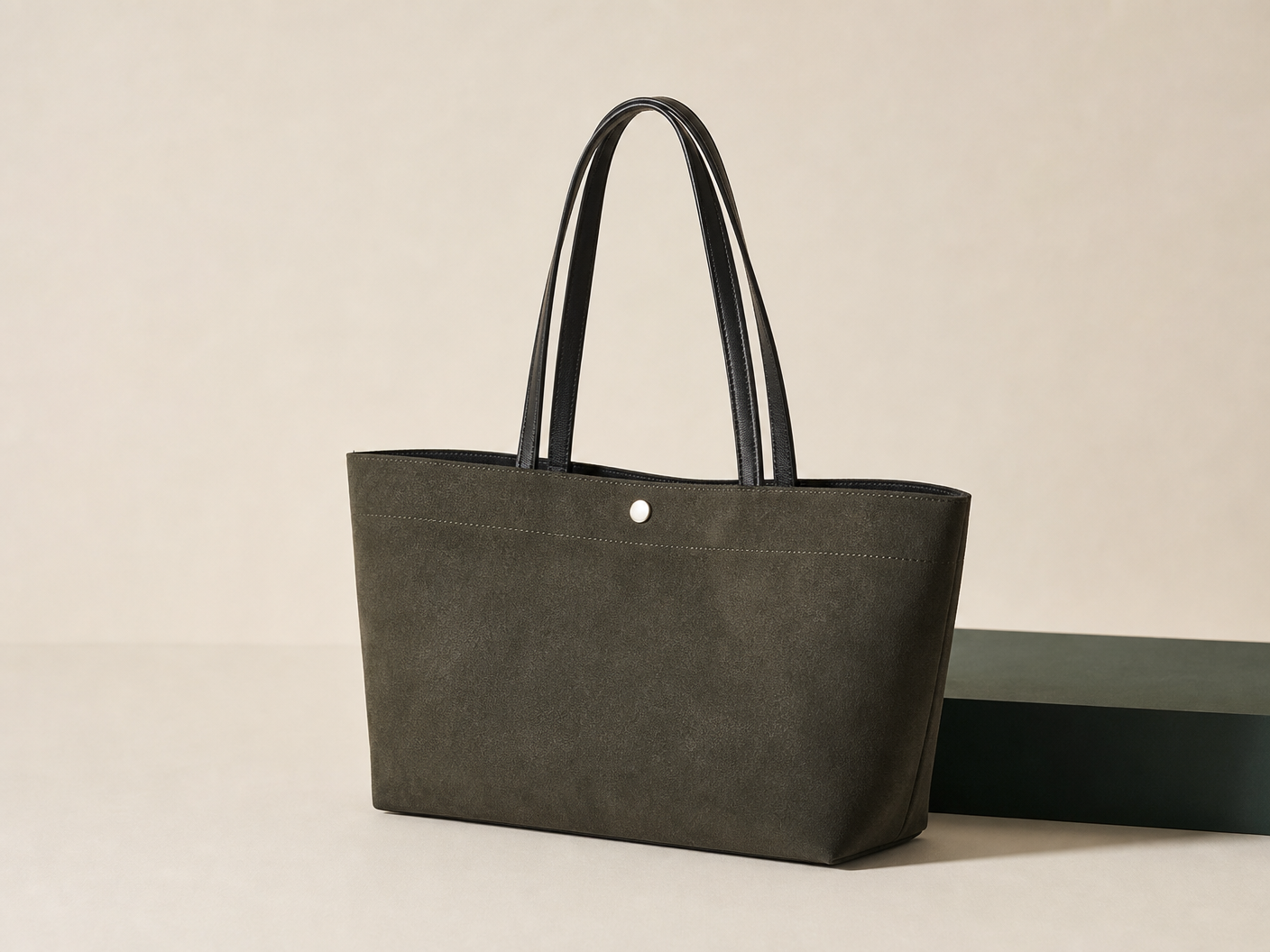
Coordinate color, hardware and branding
Suede-look surfaces absorb and scatter light differently, which changes the apparent depth of color and metal finish.
Logo methods should be tested because pile, texture and heat response can affect clarity. Edge paint, lining and packaging should be reviewed beside the final material.
- Approve hardware on the actual material.
- Test logo size and method on a sample panel.
- Check packaging contact with the surface.
Use a sample confirmation checklist
Approve material code, color, surface direction and finished behavior together.
The supplied Bloomery product images support visible color and silhouette references only. Exact composition must be confirmed for the selected project before it is presented as a factual product specification.
- Keep an approved cutting and finished sample.
- Record grain or pile direction requirements.
- Confirm composition and care information with documentation.
Decision tool
Surface-direction comparison
| Direction | Visual and tactile effect | Buyer confirmation |
|---|---|---|
| Smooth microfiber direction | Clean face with visible panel quality | Surface consistency, edge and logo method |
| Pebbled microfiber direction | Textured depth and casual hand feel | Grain scale, color and drape |
| Suede-look direction | Soft pile with directional shading | Pile alignment, handling marks and packaging contact |
| Any finished material | Structure depends on full construction | Composition, backing, reinforcement and care source |
Before you brief a supplier
Buyer checklist
- Exact material code and composition source
- Physical color and surface approval
- Finished silhouette and handling test
- Hardware, logo, edge and packaging compatibility