Frame the commercial need
Confirm who the product is for, where it will be sold and how protection + presentation supports the range.

Custom handbag capability
Packaging planning for retail presentation, labeling and e-commerce delivery requirements.
Commercial starting point
Packaging should begin with dust bags, tissue, tags, labels, polybags, retail boxes and shipping-carton requirements. That commercial frame gives suitable production resources enough information to evaluate feasibility for retail and e-commerce buyers who need the bag protected and presented consistently.
The main planning risk is that presentation choices affect packing dimensions, protection, artwork approvals and final delivery cost. Bloomery therefore separates essential product decisions from optional variation before sampling begins.
Decision framework
Use a controlled sequence to turn protection + presentation into a brief that can be quoted, sampled and approved.
Confirm who the product is for, where it will be sold and how protection + presentation supports the range.
Separate non-negotiable requirements from optional colors, finishes and components so the first quotation remains comparable.
Use approved packaging samples, artwork files and a written packing sequence to replace subjective feedback with decisions a production team can follow.
Confirm quantities, destination, inspection scope and timing only after the approved standard and open issues are recorded.
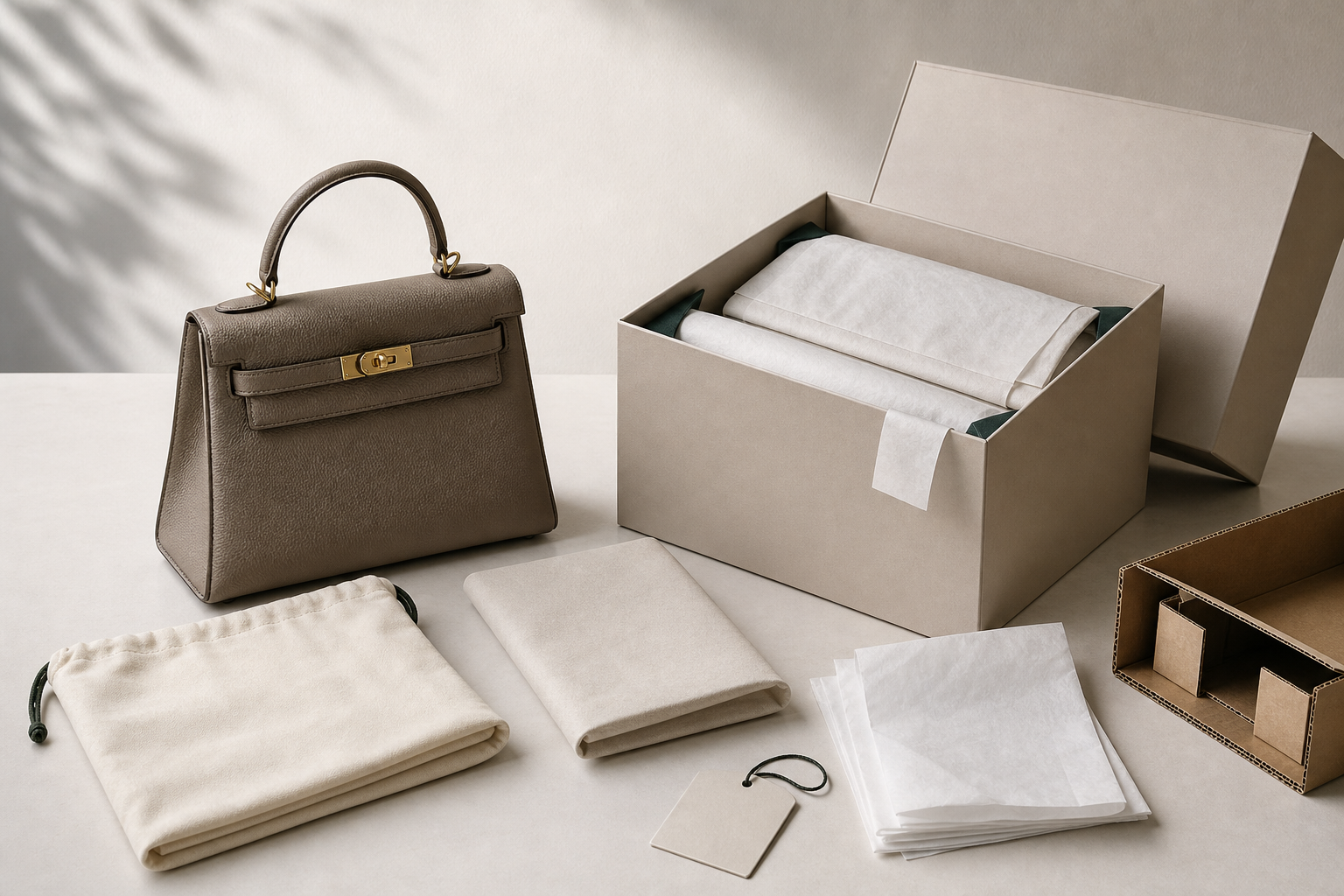
Approval evidence
A useful approval is more than a visual “looks good.” It records the measurements, materials, construction, function and finish that the next sample or production stage must reproduce.
For this route, the working reference should include approved packaging samples, artwork files and a written packing sequence. Any approved change should update the written record so cost, timing and quality expectations remain aligned.
Quotation-ready brief
A useful enquiry lets the development team identify conflicts early and return specific feasibility questions instead of a generic price range.
Describe the buyer, selling channel and reference styles so the team can judge whether the proposed direction fits retail and e-commerce buyers who need the bag protected and presented consistently.
State the choices that materially affect dust bags, tissue, tags, labels, polybags, retail boxes and shipping-carton requirements, including any required dimensions, materials, colors, hardware or brand applications.
Separate must-have requirements from optional variation. This matters because presentation choices affect packing dimensions, protection, artwork approvals and final delivery cost. It also keeps the first feasibility review comparable.
Add quantity by style and color, destination, target timing and the evidence needed for approval—ideally approved packaging samples, artwork files and a written packing sequence.
Buyer questions
These answers define the planning boundary before a project-specific feasibility review.
Start with sales channel and unboxing expectation, required labels, tags and barcodes, individual protection and box format. Add the target market, destination and timing so feasibility questions can be organized around the real commercial context.
Sampling is used to confirm proportion, function, material behavior, workmanship, branding and packing details. The useful output is approved packaging samples, artwork files and a written packing sequence, not only a photograph of the sample.
No universal figure is presented as a promise. Final commercial parameters depend on the selected construction, materials, components, style-by-color quantity, packaging, supplier fit and current production availability.
Consolidate comments into one dated revision that identifies accepted details, measurable corrections and open decisions. Update the specification and artwork record before requesting the next sample so approved packaging samples, artwork files and a written packing sequence remains the shared approval reference.
Where the product direction allows it, shared materials, hardware finishes, lining, labels, packaging dimensions and inspection points can reduce unnecessary variation. Standardization should support dust bags, tissue, tags, labels, polybags, retail boxes and shipping-carton requirements without erasing the intended differences between styles.
Start a conversation
Send sales channel and unboxing expectation, required labels, tags and barcodes, individual protection and box format, shipping destination and carton limits. Bloomery will organize the right product-development and approval questions for a project-specific review.
We use only necessary browser storage to remember privacy preferences and support core site functions.