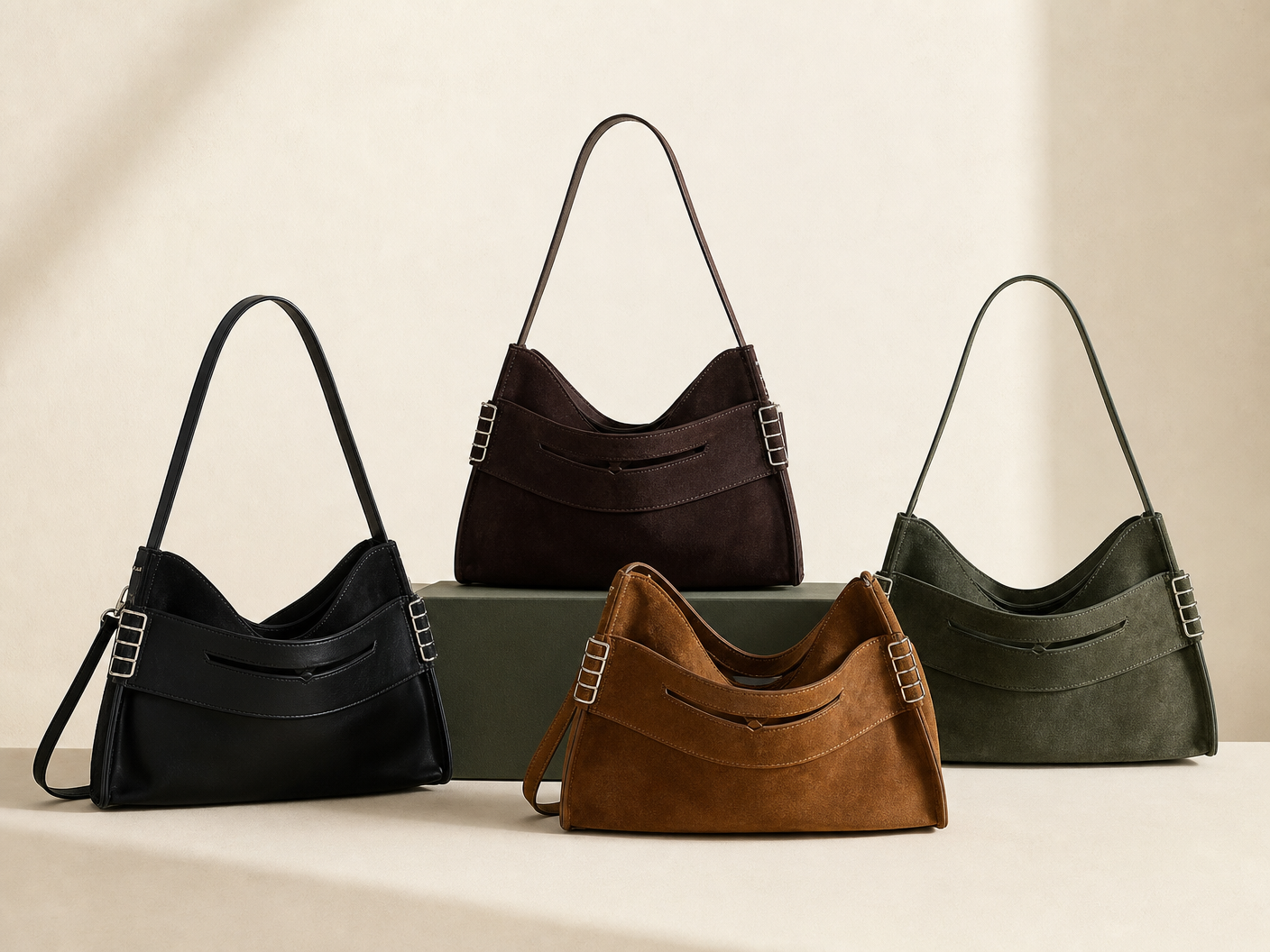
Choose OEM when the product concept, dimensions and brand details are already defined. Choose ODM when speed and a proven starting silhouette matter more than complete design ownership.
Use this guide alongside Custom handbag development when choosing the initial direction. The Materials and craft planning page covers the next specification or development layer.
Buyer inputs required by OEM and ODM
OEM needs a more complete brief before accurate development can begin. ODM can begin with a selected base style and a controlled list of changes.
For OEM, prepare reference images, intended dimensions, carry method, material direction, hardware, lining, branding and packaging. For ODM, identify what must change on the base design and what can remain standard.
- Define non-negotiable brand details before requesting a quote.
- Separate visual references from confirmed specifications.
- State target quantity and launch timing as planning inputs, not fixed supplier promises.
Control, flexibility and development responsibility
OEM gives the buyer more control, but it also places more decisions and approval work on the buyer. ODM reduces early design work but limits how far the base platform should be changed.
Large changes to an ODM base can remove its speed advantage. If the silhouette, opening, pattern and reinforcement all change, the project behaves more like OEM development and should be planned that way.
- Map each requested change to appearance, construction or packaging.
- Confirm which party owns drawings, patterns and approval records.
- Avoid calling a heavily modified base style “simple ODM.”
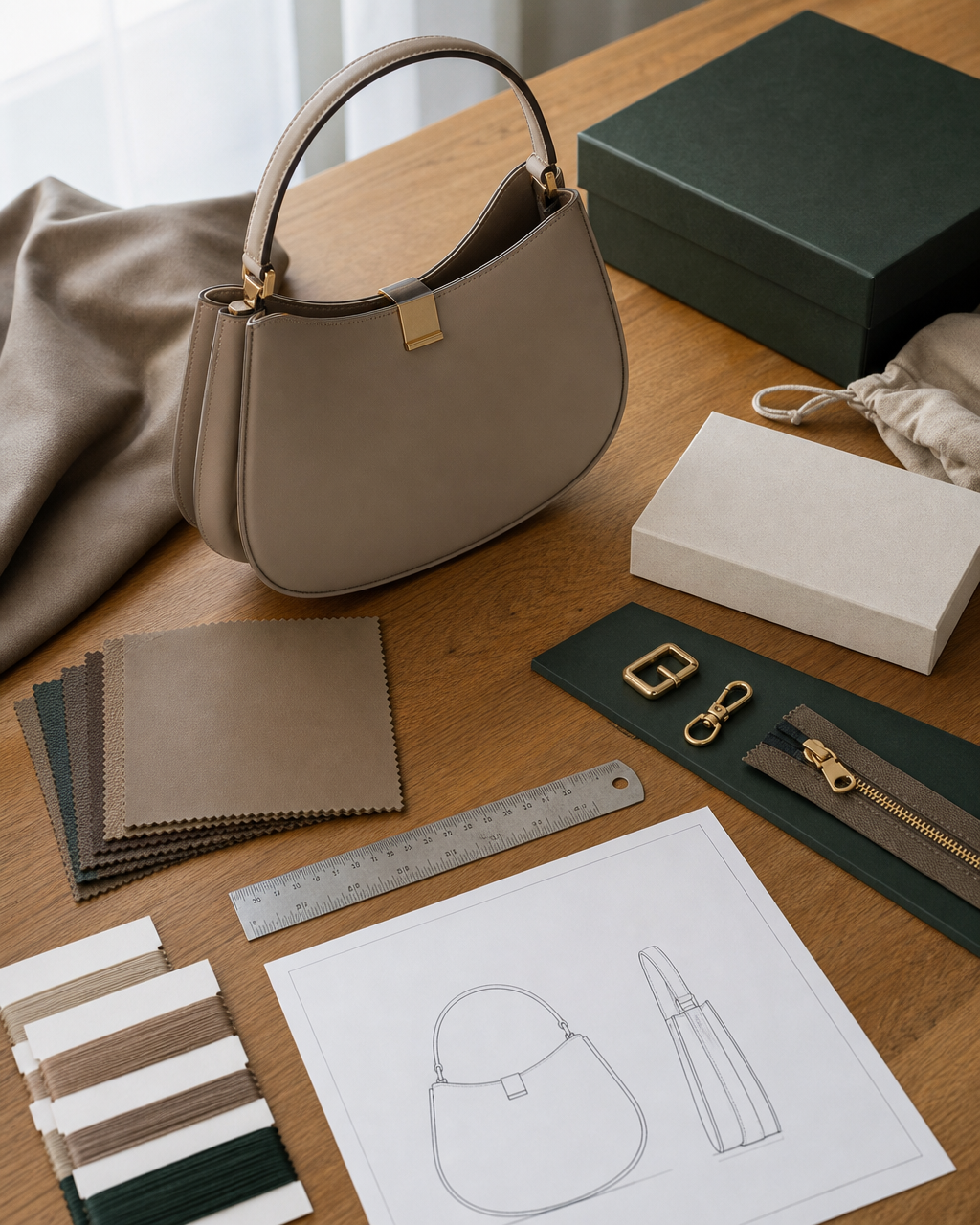
Sample and approval differences
OEM samples prove a new specification. ODM samples prove that selected changes work on an existing platform.
Both routes still require material, color, hardware, logo and packaging approval. Bloomery’s approved operating profile uses a 7–12 business-day sample target, subject to the selected construction and components.
- Approve a written specification beside the physical sample.
- Record every revision instead of relying on chat history.
- Do not approve bulk production from appearance alone.
Decision checklist by brand stage
Early brands often benefit from a controlled ODM starting point. Established brands with clear product systems can justify the extra work of OEM.
The decision is not about which label sounds more professional. It is about the amount of product knowledge, design ownership and approval capacity available inside the buying team.
- Use ODM to test a category with limited structural changes.
- Use OEM for signature silhouettes or protected brand details.
- Reassess the model when requested changes expand during sampling.
Decision tool
OEM and ODM handbag development compared
| Decision factor | OEM route | ODM route |
|---|---|---|
| Starting point | Buyer-defined concept or specification | Existing supplier or development platform |
| Buyer workload | Higher product-definition and approval load | Focused selection and modification work |
| Design flexibility | Broad, within technical and commercial limits | Best for controlled changes to a base style |
| Best fit | Brands with a clear product system | Brands prioritizing speed and a lower-definition starting point |
Before you brief a supplier
Buyer checklist
- Target customer and price position
- Reference images plus written specifications
- Material, hardware, branding and packaging decisions
- Named approvers and revision-control method