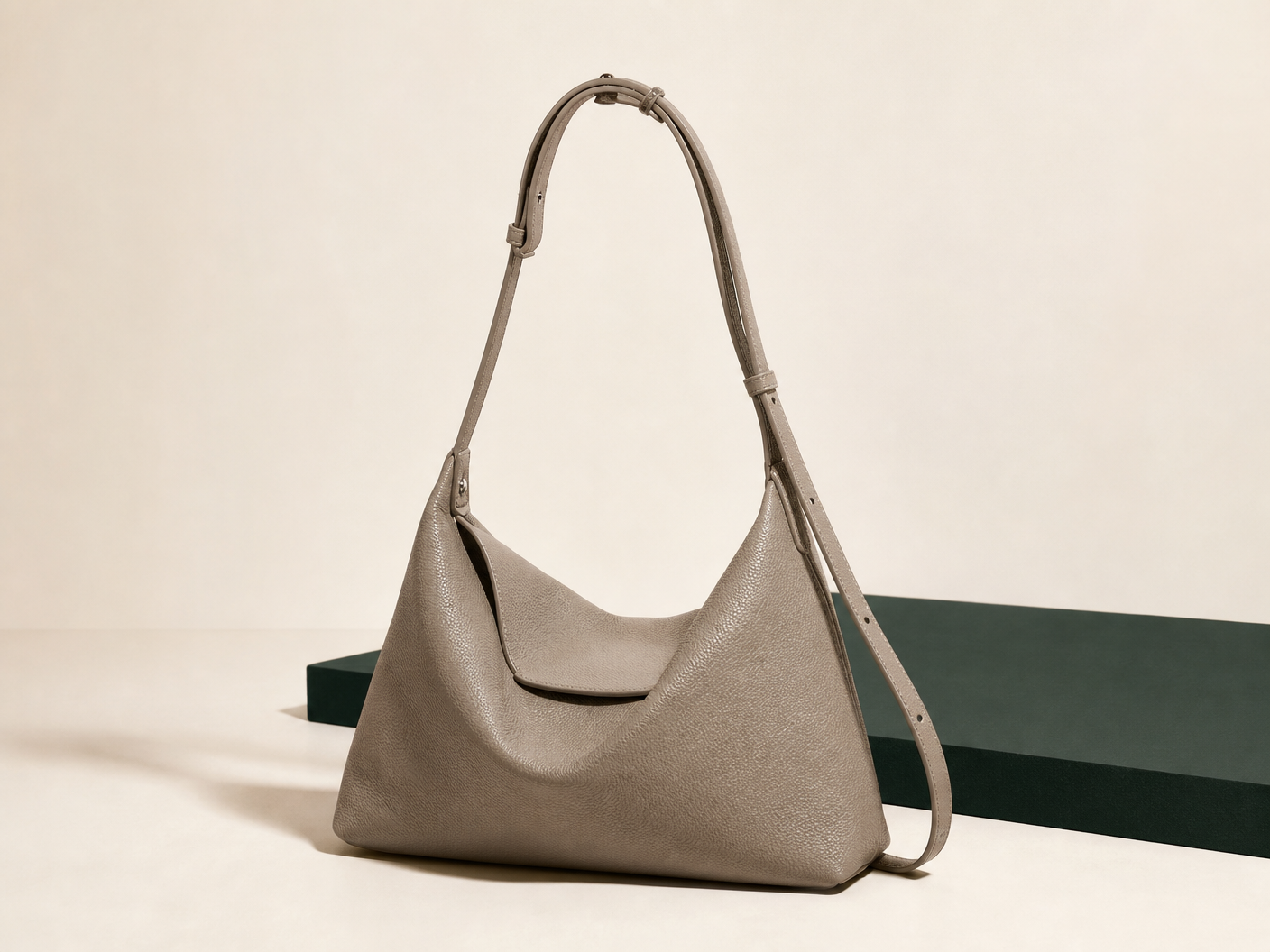
Approve material as part of a complete construction sample. A swatch can show color and hand feel, but it cannot prove drape, recovery or edge behavior in the finished bag.
Use this guide alongside Soft hobo collection when choosing the initial direction. The Materials and craft page covers the next specification or development layer.
Define drape and recovery requirements
Soft hobos need controlled collapse, not uncontrolled stretching.
The body should form the intended curve when carried and recover enough to remain presentable. Material thickness, backing, panel size and lining all influence the result.
- Describe the desired empty and loaded silhouette.
- Test recovery after folding and hanging.
- Separate softness from low structural stability.
Compare surface texture and hand feel
Smooth, pebbled and suede-look surfaces create different visual depth and handling expectations.
Pebbled surfaces can disguise minor handling variation. Suede-look surfaces show pile direction and shading. Smooth surfaces make panel and edge quality more visible.
- Approve color under consistent lighting.
- Review rubbing and handling marks on the sample.
- Match surface direction across visible panels.
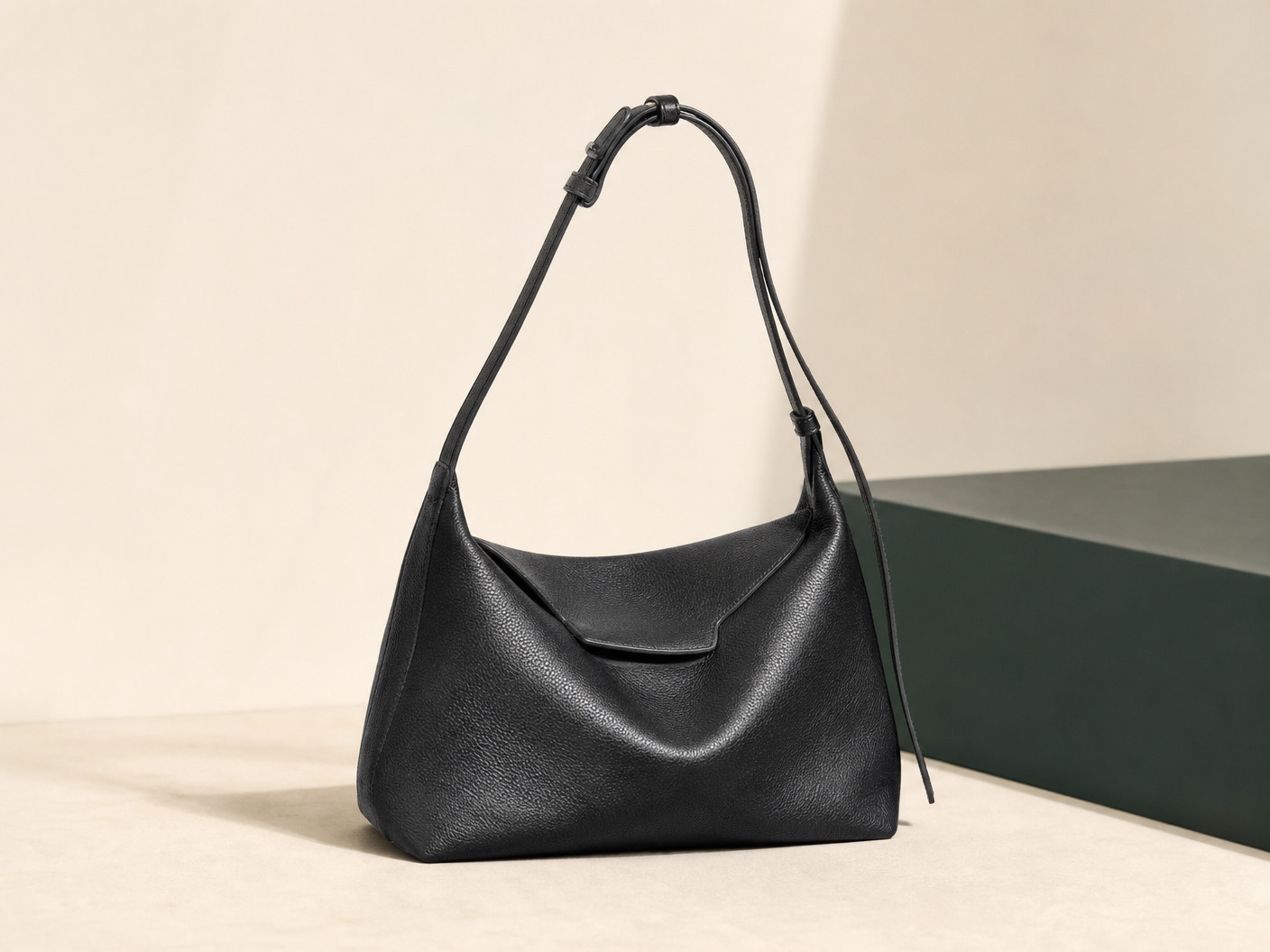
Plan lining, reinforcement and edges
A soft exterior may still need controlled support at the opening, handle anchors and base.
Lining should move with the body without creating bulk or pulling the outer material. Edge construction must suit the material’s ability to turn, fold or accept edge paint.
- Map support only where the bag needs control.
- Test lining movement with the bag filled.
- Review edge cracking, waviness and thickness.
Use a material confirmation checklist
Confirm the material code, color, backing and approved sample behavior together.
Photographs are useful records, but the physical sample remains important for hand feel and drape. Note any approved variation so later reviews use the same standard.
- Keep an approved cutting with the sample record.
- Record pile or grain direction requirements.
- Confirm cleaning guidance with the selected production resource.
Decision tool
Material direction and hobo behavior
| Surface direction | Visual effect | Development focus |
|---|---|---|
| Smooth | Clean, refined panels | Surface consistency and edge quality |
| Pebbled | Textured, casual depth | Grain consistency and drape |
| Suede-look | Soft, directional shading | Pile direction, color and handling marks |
| Backed soft material | Controlled softness | Bonding, recovery and seam bulk |
Before you brief a supplier
Buyer checklist
- Empty and loaded drape target
- Surface and color approval
- Support map for opening, anchors and base
- Physical sample plus material record