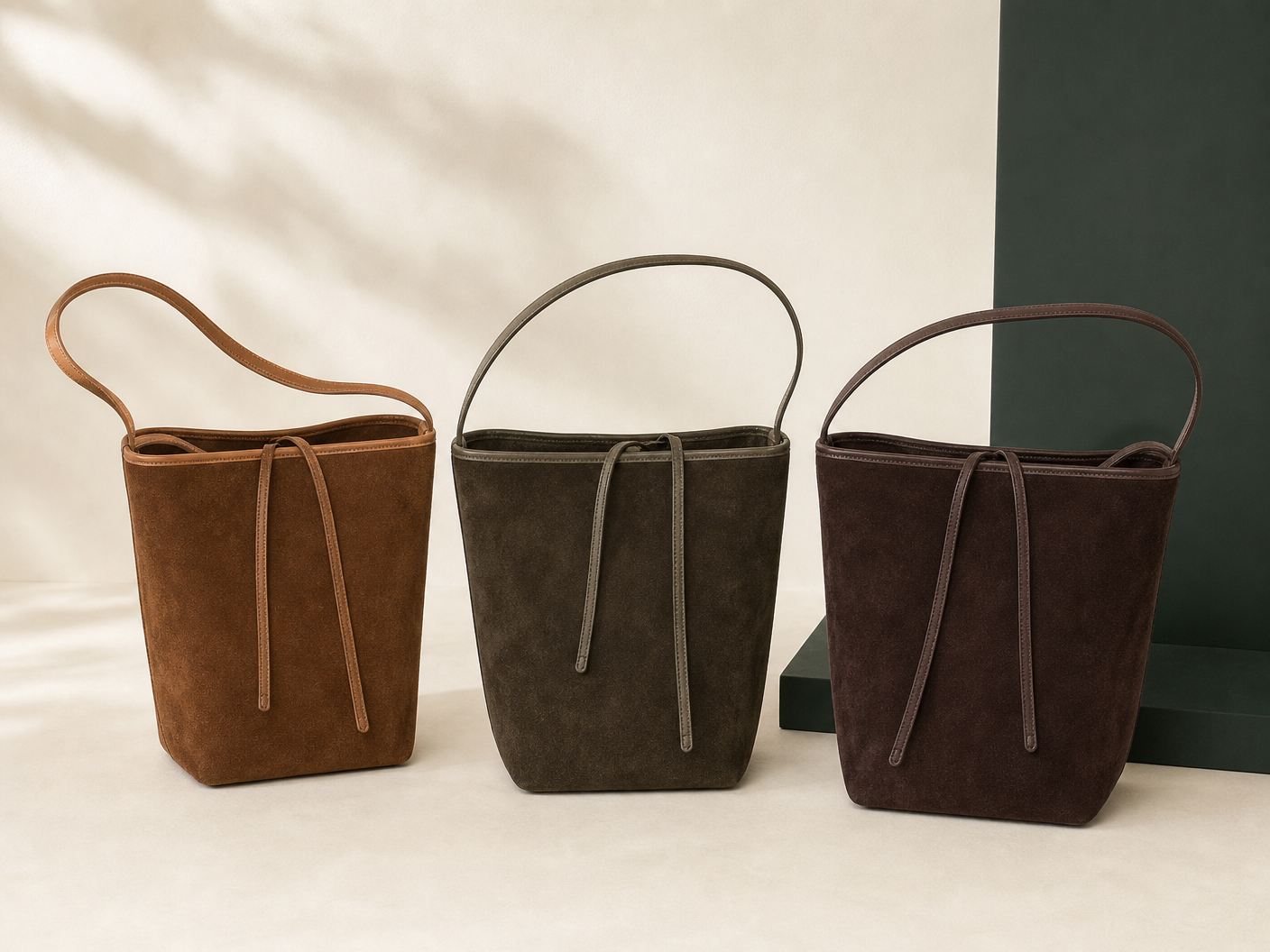
A strong first line is usually a coordinated small assortment, not a large set of unrelated ideas. Define the buyer, product role and approval rules before adding styles.
Use this guide alongside Custom handbag services when choosing the initial direction. The Material and component decisions page covers the next specification or development layer.
Define the target customer and assortment
Choose a specific customer, use occasion and price position before selecting handbag silhouettes.
A line for work-focused shoppers needs a different capacity and access logic from an evening capsule. Define the role of each style so the assortment does not compete with itself.
- Write one customer statement that the full team can use.
- Assign every style a clear commercial role.
- Limit the first range to differences buyers can understand.
Build the reference collection and specification brief
Reference images communicate direction, but they do not replace a specification.
For each style, record silhouette, approximate dimensions, opening, carry method, material direction, color, hardware, lining, branding and packaging. Mark uncertain items as decisions to confirm during development.
- Use product codes so revisions stay traceable.
- Label reference features instead of sending unexplained image boards.
- Separate visible preferences from required performance.
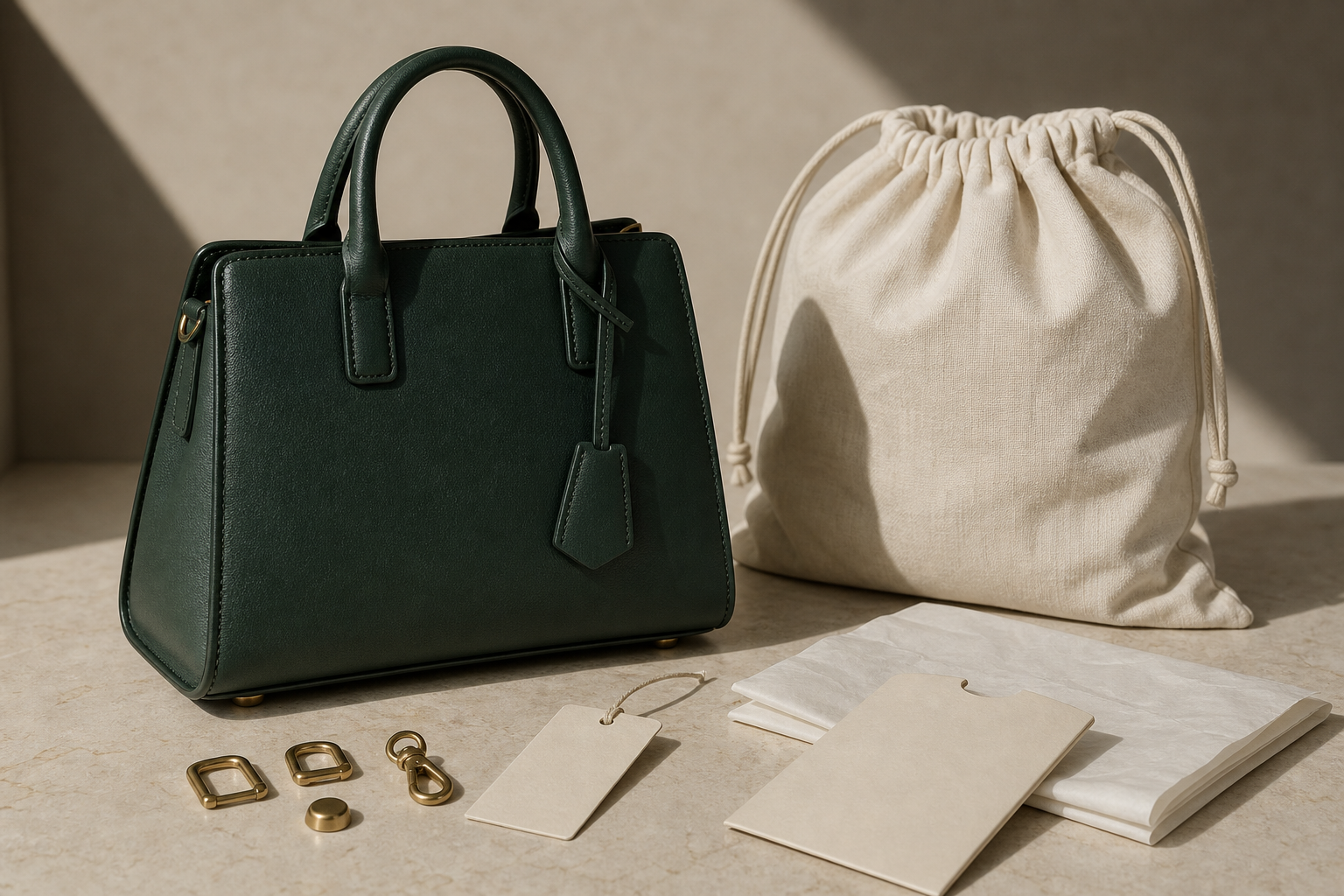
Plan sampling, branding and packaging decisions
Sampling should test the complete sellable concept, including logo position and packaging needs.
Bloomery’s approved profile uses a 7–12 business-day sample target. Timing still depends on material, hardware and packaging choices, so confirm inputs before treating the target as a schedule.
- Approve color and hardware against named references.
- Check logo scale on the physical product.
- Confirm retail and e-commerce packaging separately when needed.
Connect quotation, approval and launch planning
A quotation only becomes useful when quantity, specification and approval status are clear.
Bloomery’s planning profile uses a standard MOQ range of 100–300 pieces per style and color and a 30–45 day bulk target after approval. Both remain subject to the actual construction and sourcing plan.
- Build contingency time after sample approval.
- Avoid final campaign dates before production inputs are confirmed.
- Plan replenishment logic before multiplying colorways.
Decision tool
First-line planning sequence
| Stage | Primary output | Do not advance until |
|---|---|---|
| Market definition | Customer, use occasion and price position | Every proposed style has a commercial role |
| Product brief | Written style and component specification | Open decisions are clearly marked |
| Sampling | Approved product and revision record | Material, hardware, logo and packaging are signed off |
| Launch planning | Quantity, production and delivery plan | The approved sample matches the commercial scope |
Before you brief a supplier
Buyer checklist
- Customer and channel definition
- Small coordinated silhouette plan
- Written specification for every style
- Approval owner, budget range and launch window