Microfiber leather
Consistent surface, refined hand feel and strong abrasion performance for premium non-leather programs.
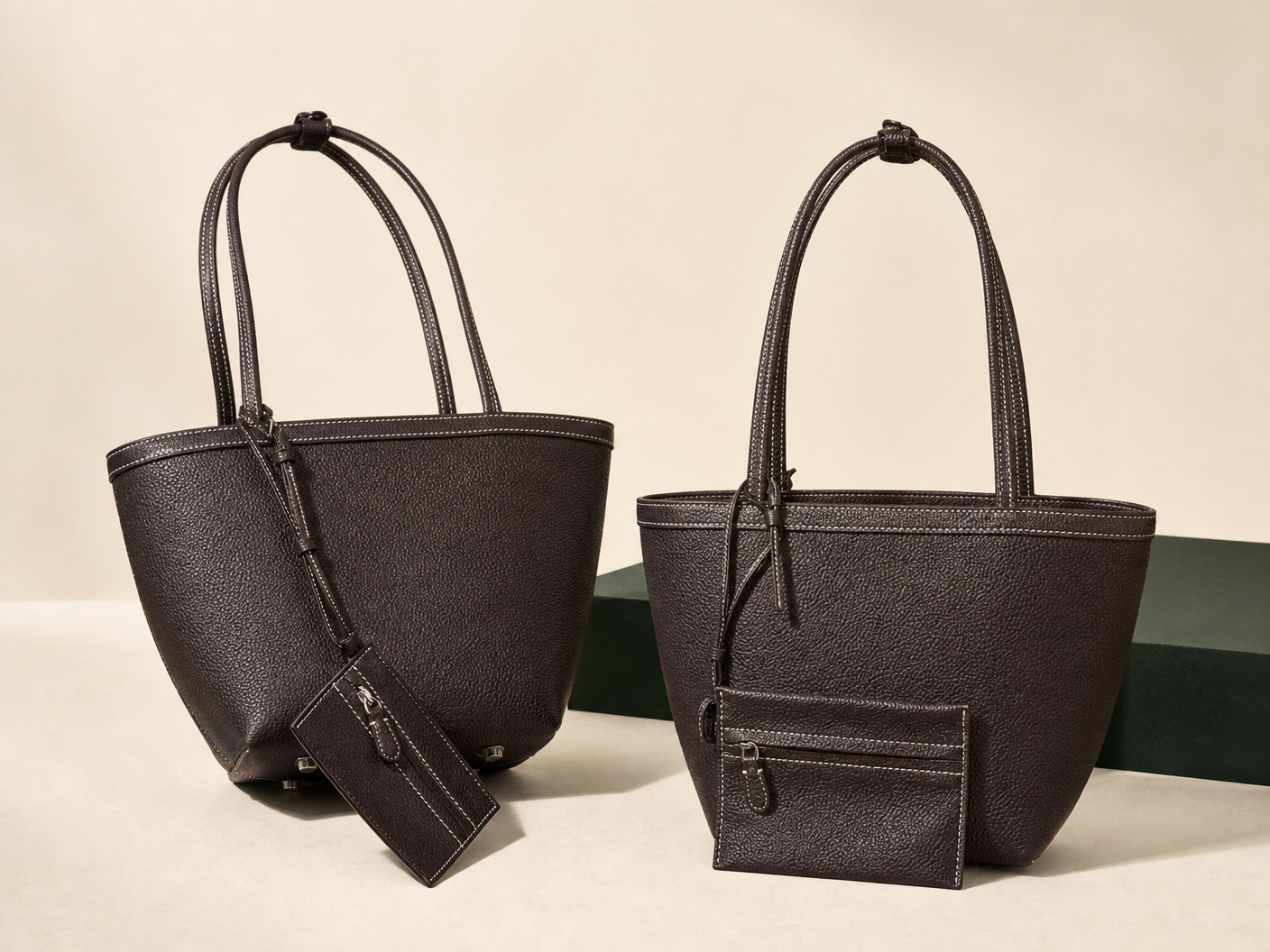
Material · construction · finish
Surface, drape, reinforcement, edge finishing and hardware work together. We help select them as one product system, aligned with your customer and price position.
Material direction
Sampling is where visual preference meets durability, consistency, availability and quantity.
Consistent surface, refined hand feel and strong abrasion performance for premium non-leather programs.
Broad texture and color choice with flexible price positioning for fashion-led collections.
Soft directional texture and seasonal warmth, with cutting direction and shade control built into production.
Canvas, woven and combined constructions for lighter weight and stronger seasonal storytelling.

Construction
Boards, foam, reinforcement tape, piping, edge paint, stitch density and seam placement determine whether a bag feels crisp, relaxed or somewhere in between. We define those choices in the approved specification.
Brand touchpoints
Logo method, hardware finish and packaging should be approved together so the customer sees one consistent product story.
Approval sequence
The approved Bloomery profile uses four control stages. The exact checks and any third-party testing remain project-specific.
Confirm surface, color, components and reference standards before the sample becomes the production benchmark.
Record approved measurements, construction, branding, hardware, lining and packaging.
Review workmanship and recurring production risks while corrective action is still practical.
Check the finished order against the approved standard and coordinate third-party review when required.
Prepare the conversation
Clear inputs help compare material and construction options without turning the first sample into guesswork.
Customer, carry purpose and expected daily use.
Preferred appearance, hand feel, color and drape.
Logo method, hardware finish, lining and packaging.
Quantity, price position, target market and launch timing.
Start a conversation
Send the intended use, surface direction, quantity and timing. Bloomery will identify the feasibility questions, evidence and next approval step that matter most.
We use only necessary browser storage to remember privacy preferences and support core site functions.