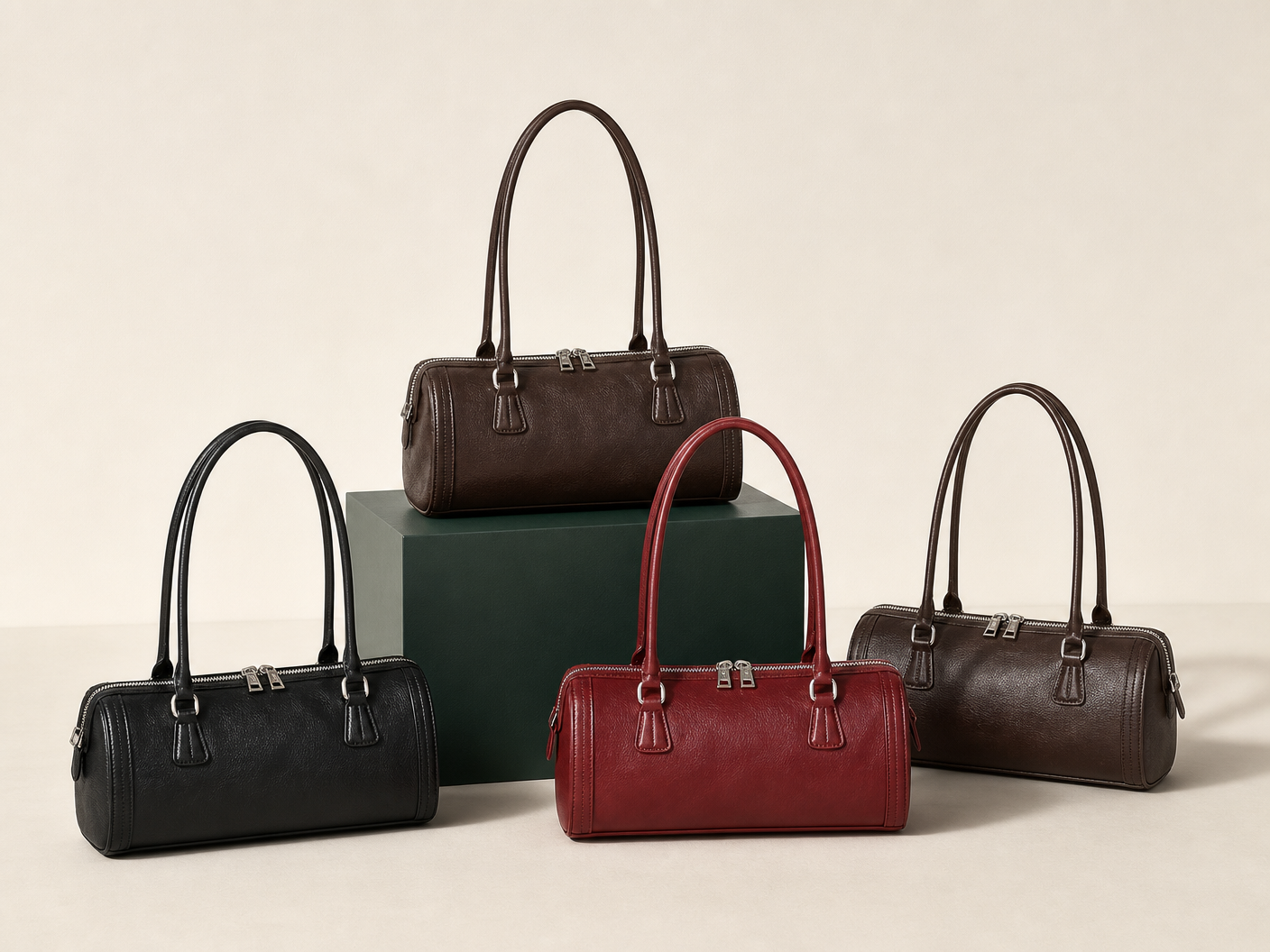
Choose from the side profile and opening behavior, not the category name. A compact Boston and a softened barrel can overlap unless their product roles are clearly separated.
Use this guide alongside East-west and Boston bags when choosing the initial direction. The Materials and construction page covers the next specification or development layer.
Shape and proportion comparison
Boston bags are commonly read as rectangular or domed travel forms. Barrel bags are read through a rounded, tube-like body.
The side panel, base and top curve create most of the distinction. Front-view references alone can hide whether the body is box-led, dome-led or cylindrical.
- Include front, side and base views in the brief.
- Define whether the bag should stand when empty.
- Record the intended width-to-height relationship.
Carry and opening construction
Boston forms often use a long zip opening between top handles. Barrel forms may use a curved zip that follows the cylindrical body.
Opening construction affects access, lining assembly and shape retention. The strap and handle anchors must also suit the direction of load through the body.
- Check usable opening length, not only zipper length.
- Review handle balance with the bag partially loaded.
- Confirm whether a shoulder strap changes the anchor requirement.
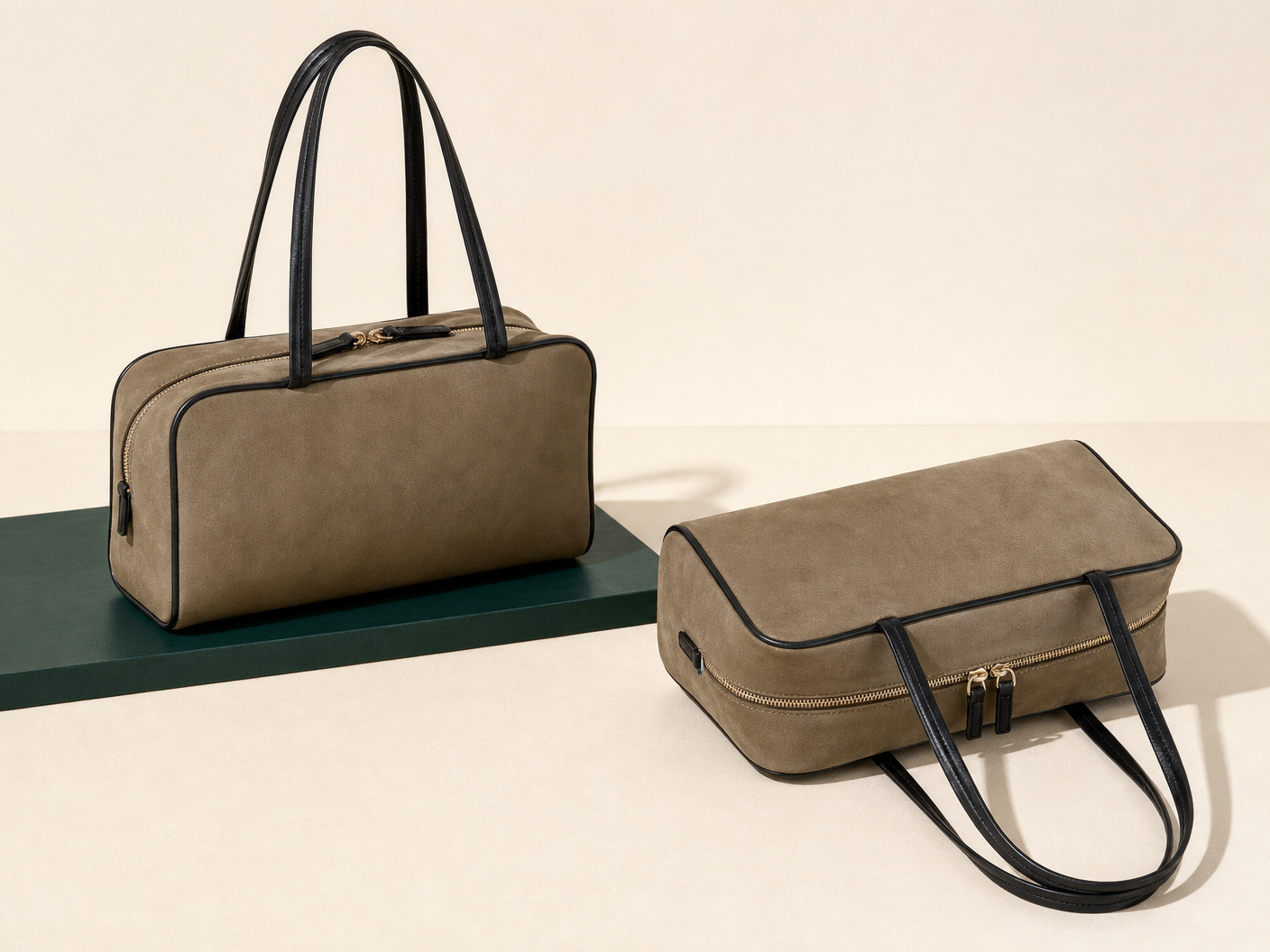
Soft versus structured presentation
Either silhouette can be softened, but excessive collapse can erase the intended category signal.
A Boston bag often needs a more legible base and side structure. A fashion barrel can tolerate more drape if the rounded body remains visible.
- Mark panels that must retain form.
- Use piping or edge treatment only when it supports the design.
- Evaluate the empty and loaded silhouette.
Collection-fit decision guide
Use a Boston bag for polished travel or city positioning and a barrel for a rounded, directional or sport-influenced statement.
The final role depends on scale, material and styling. Compare the new style with existing top-handle and shoulder products before approving another overlapping shape.
- Name the merchandising story for the silhouette.
- Check overlap with east-west and bowling-style bags.
- Choose material and hardware that reinforce the intended role.
Decision tool
Boston and barrel bag decision table
| Dimension | Boston bag | Barrel bag |
|---|---|---|
| Core geometry | Defined base with rectangular or domed body | Rounded or cylindrical body volume |
| Opening logic | Wide top zip between handles | Zip follows the curved or elongated top |
| Visual position | Polished, travel-inspired, city | Directional, casual or sport-influenced |
| Shape risk | Corners and base can collapse | Cylinder can flatten or twist |
Before you brief a supplier
Buyer checklist
- Side profile and base geometry
- Opening length and access
- Empty and loaded shape
- Role beside other top-handle styles