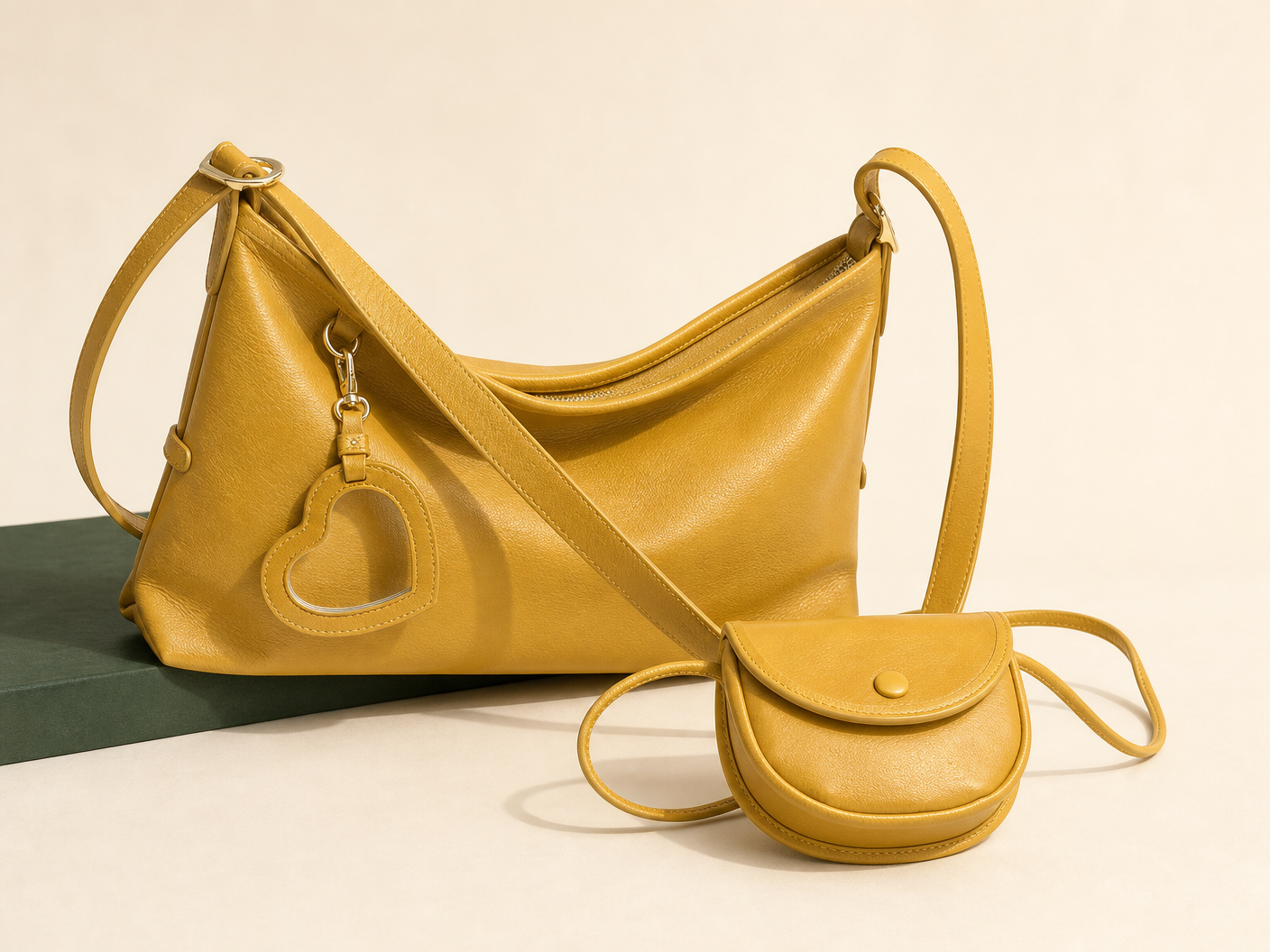
Do not shrink a full-size hobo uniformly. Mini versions need their own opening, handle, hardware and proportion decisions to remain usable.
Use this guide alongside Hobo bag collection when choosing the initial direction. The Material planning page covers the next specification or development layer.
Capacity and consumer-use differences
Mini hobos suit essentials and fashion-led use, while full-size hobos support broader daily carry.
List the expected contents for each size and test access through the curved opening. A small bag can lose useful capacity quickly when the opening or internal hardware consumes space.
- Define the minimum useful contents for the mini.
- Test full-size comfort with a realistic load.
- Check whether the curve limits access more than volume.
Price architecture and merchandising role
A mini can create an accessible entry point or seasonal statement, while a full-size hobo can anchor the category.
Price position still depends on material, hardware and construction. Do not assume the smaller bag will be proportionally cheaper when hardware and workmanship remain similar.
- Assign an entry, core or statement role.
- Compare component cost, not only material area.
- Plan channel placement for each size.
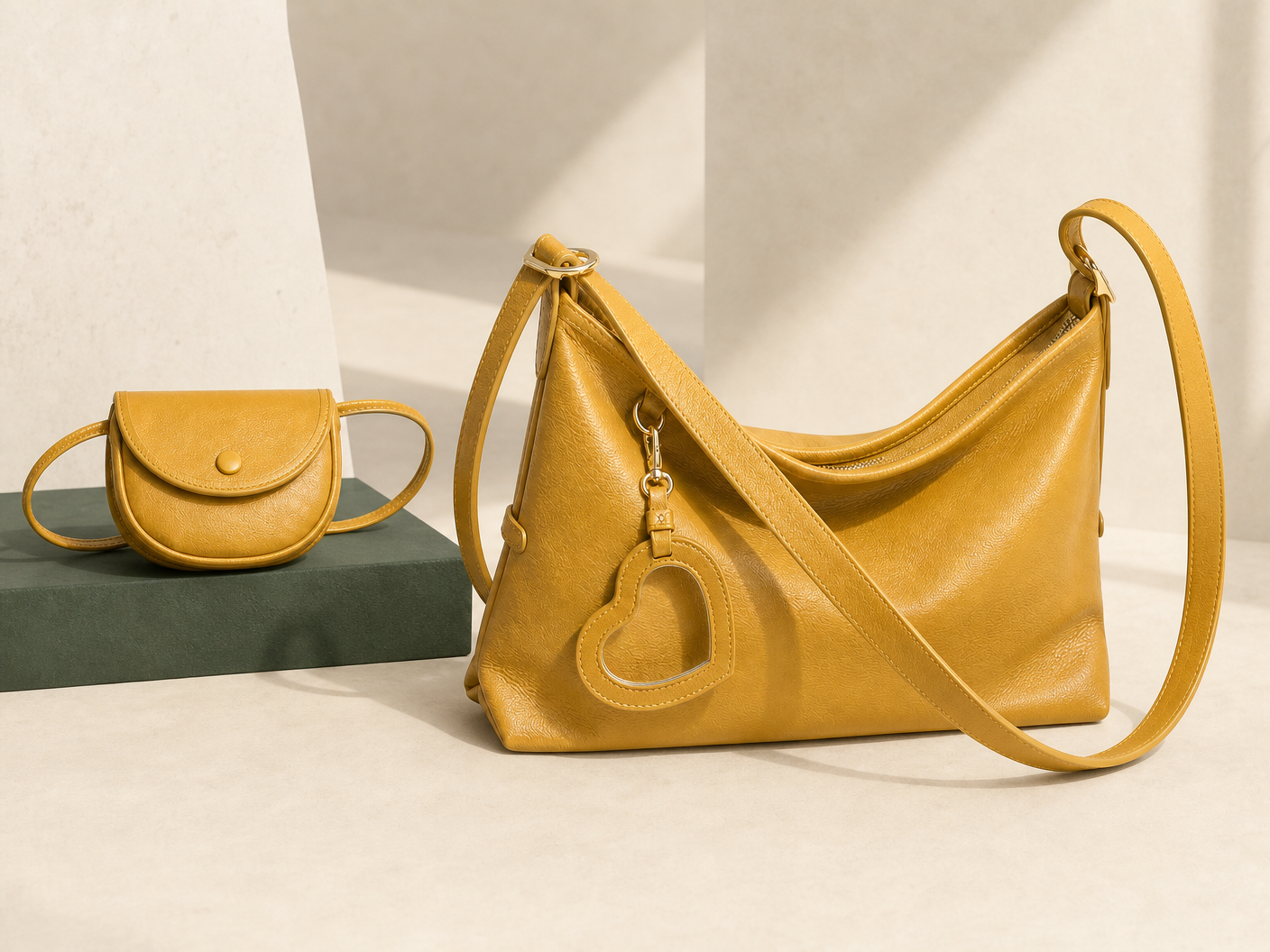
Shared design platform opportunities
The two sizes can share a curve language, material, logo and hardware finish while using different functional proportions.
Handle drop, opening length, pocket scale and anchor position usually need size-specific adjustment. Shared parts are useful only when they work properly in both formats.
- Share visual identity before sharing dimensions.
- Scale hardware by body, not by convenience.
- Keep pocket and closure usability size-specific.
Size-range selection checklist
Carry both sizes when they serve different buyer moments and can be shown clearly in merchandising.
If the mini and full-size versions compete for the same occasion, test one as the lead style first. Use color distribution to strengthen the different roles rather than cloning every option.
- Write a use occasion for each size.
- Compare opening and comfort under realistic load.
- Limit duplicate size-color combinations.
Decision tool
Mini and full-size hobo roles
| Decision area | Mini hobo | Full-size hobo |
|---|---|---|
| Primary value | Silhouette and light essentials carry | Everyday volume and soft comfort |
| Key risk | Opening becomes too restrictive | Load causes stretch or uncomfortable carry |
| Platform opportunity | Shared curve, finish and branding | Shared curve, finish and branding |
| Size-specific work | Hardware, pocket and opening scale | Reinforcement, handle comfort and base behavior |
Before you brief a supplier
Buyer checklist
- Distinct use occasions
- Realistic contents test
- Size-specific opening and handle geometry
- Controlled size-color matrix