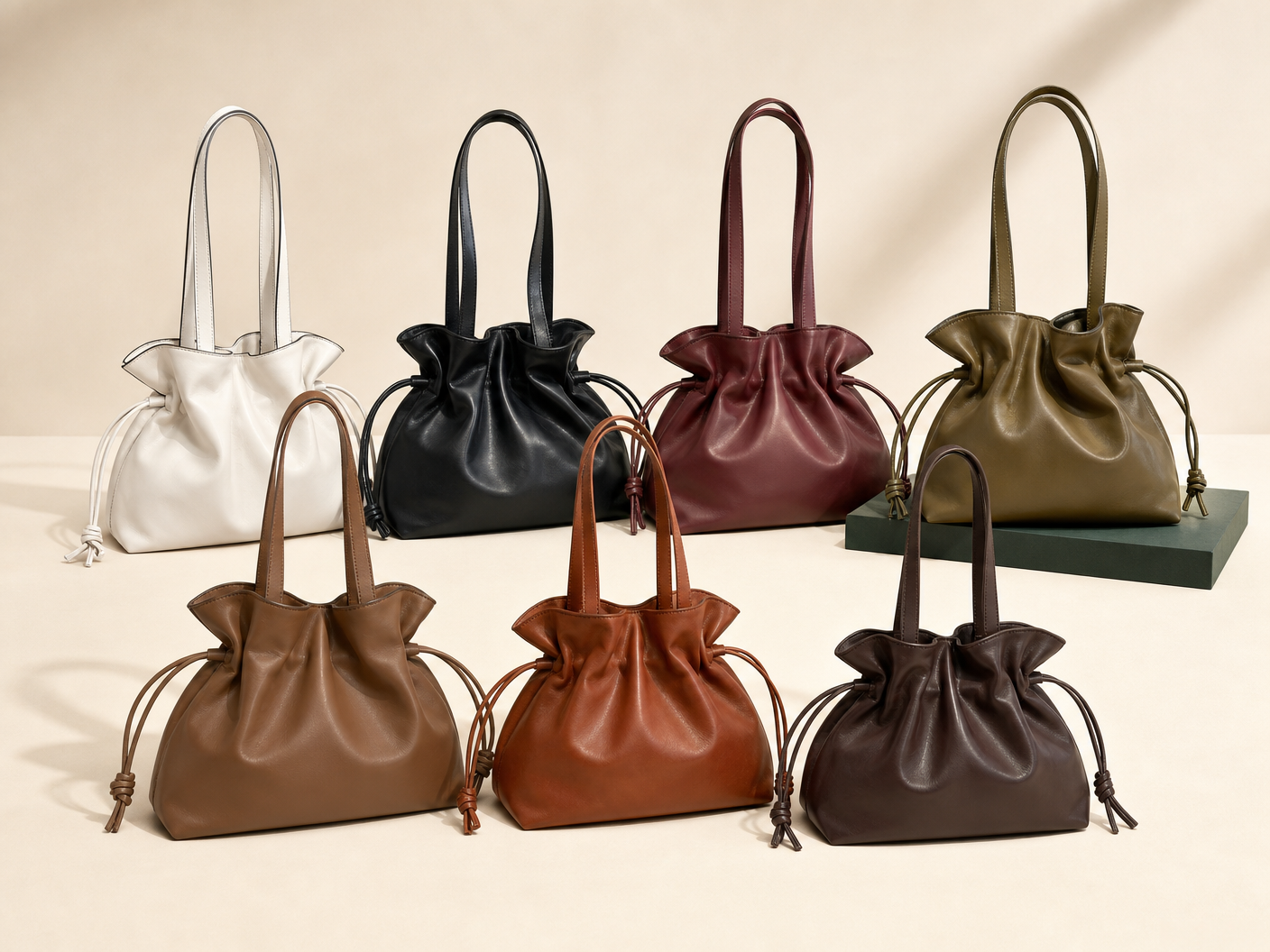
Specify whether the cord is decorative, adjustable or the primary closure. That single decision changes the channel, reinforcement, lining and usability requirements.
Use this guide alongside Drawstring and gathered bags when choosing the initial direction. The Construction planning page covers the next specification or development layer.
Gathering and closure differences
Ruched construction fixes or controls folds for appearance, while a drawstring moves through a channel to adjust the opening.
A gathered bag can use elastic, stitching or fixed folds without a working cord. A drawstring needs a usable path, end treatment and opening range.
- Label decorative and functional cords separately.
- Define the fully open and fully closed positions.
- Show where gathers should remain distributed.
Volume control and shape retention
Gathering adds surface volume, but it can also pull the bag out of symmetry.
The body pattern, channel position and lining allowance must work together. A drawstring should close evenly without trapping lining or creating excessive force at one point.
- Test symmetry in open and closed states.
- Review cord force and hand comfort.
- Check whether the base remains stable as the top gathers.
Material and lining implications
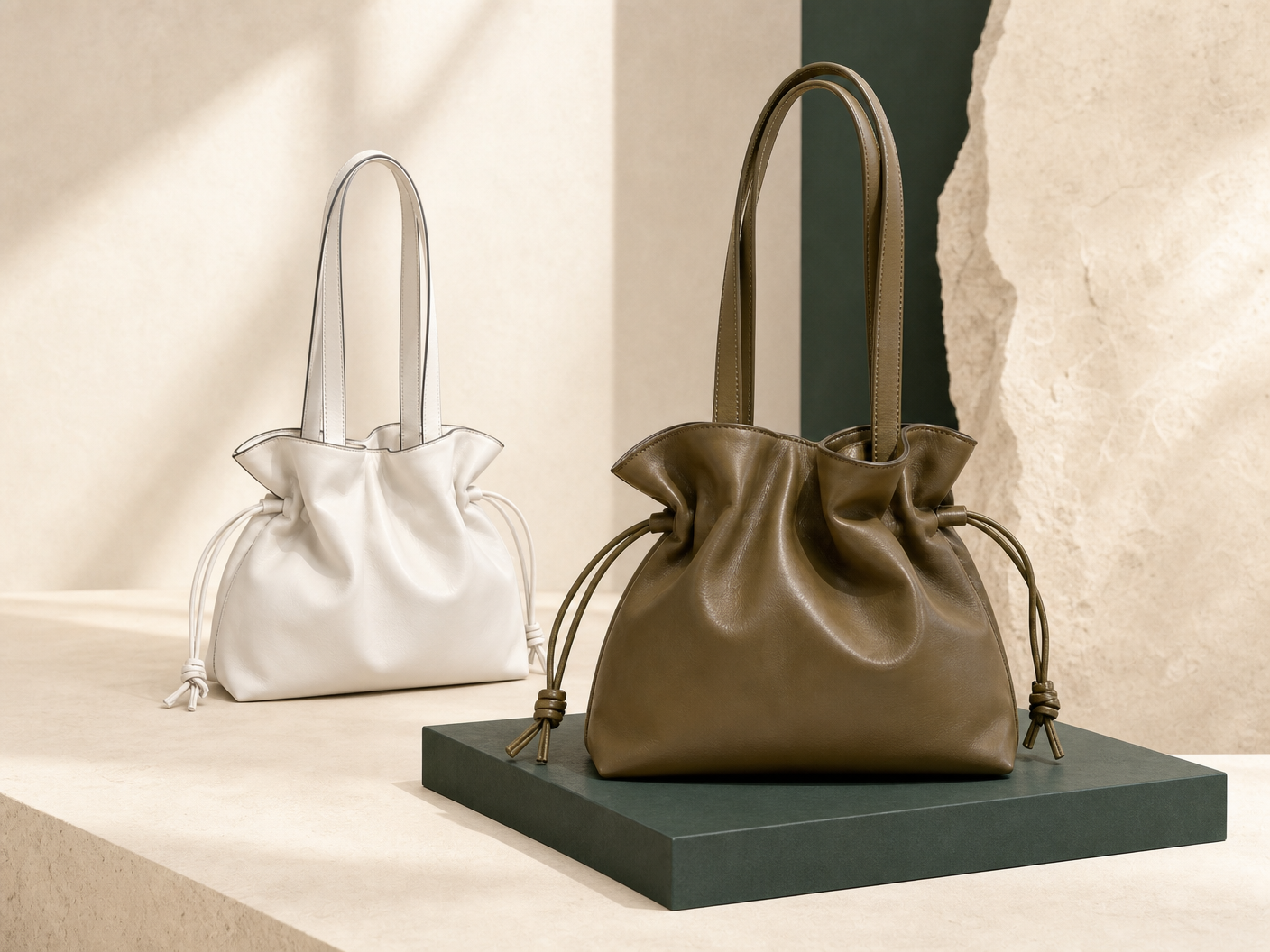
Materials must fold cleanly enough for the intended gather density.
Thick or heavily backed materials may create bulky channels. Very soft materials can lose the designed fold rhythm. Lining needs sufficient ease but must stay clear of the cord path.
- Sample gather density in the actual material.
- Check channel bulk at seams and corners.
- Secure lining away from moving cords.
Match construction to the collection brief
Use ruching for a sculpted fashion statement and functional drawstrings when adjustable access is part of the product experience.
A hybrid can work when the customer can understand both the look and the closure. Avoid adding cords only as decoration when they create unnecessary weight or handling complexity.
- Name the primary visual and functional role.
- Confirm the opening-security expectation.
- Review the design beside other soft silhouettes in the range.
Decision tool
Ruched and drawstring construction compared
| Dimension | Ruched bag | Functional drawstring bag |
|---|---|---|
| Primary purpose | Controlled decorative folds | Adjustable opening or closure |
| Moving parts | May be fixed or elasticated | Cord, channel and end treatment |
| Key risk | Uneven or bulky gathering | Friction, lining capture or poor closure |
| Material need | Predictable fold and recovery | Foldability plus channel durability |
Before you brief a supplier
Buyer checklist
- Decorative versus functional cord decision
- Open and closed dimensions
- Gather distribution and symmetry
- Material, channel and lining test