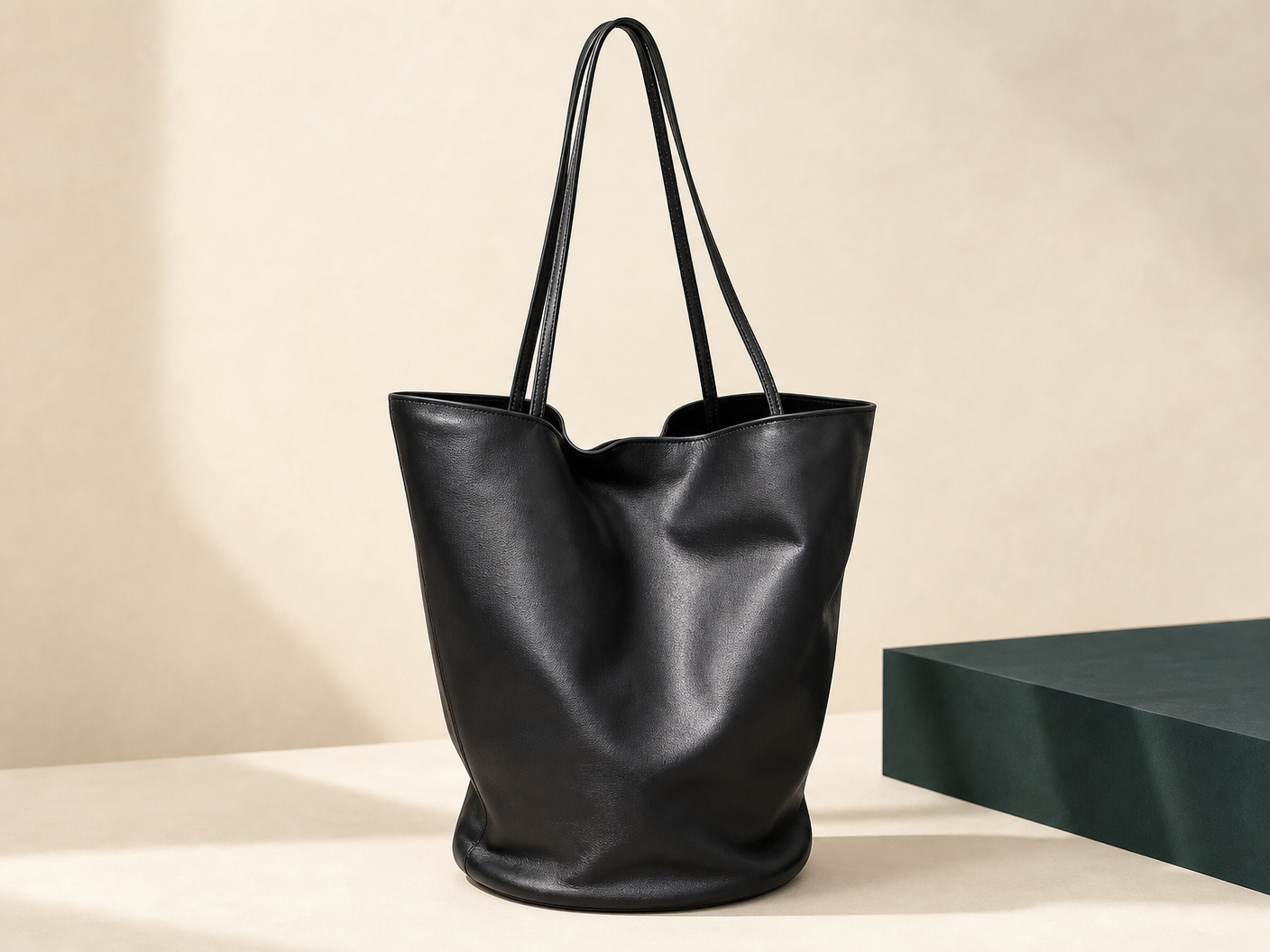
Use the intended load, opening security and collection role to choose the structure. The name alone does not define construction.
Use this guide alongside Tote and shopper collection when choosing the initial direction. The Materials and craft page covers the next specification or development layer.
Silhouette and opening differences
Shopper bags tend to use a broad open top, while totes can use open, zipped or shaped openings. Bucket totes narrow the opening over a deeper body.
Names vary across markets, so describe the visible proportion and opening method in the brief. This prevents a supplier from interpreting “shopper” or “tote” differently from the buyer.
- Specify top width, base width and side profile.
- Name the closure rather than assuming one.
- Include front, side and open-top references.
Capacity and use-case comparison
Capacity should be planned from the use occasion, not from size labels such as small or large.
A retail shopper may prioritize flexible volume. A work tote may need organized access and a more stable base. A bucket tote can hold volume while presenting a softer fashion shape.
- List the items the target buyer is expected to carry.
- Check handle drop against outerwear and carry mode.
- Use physical mockups when capacity is commercially important.
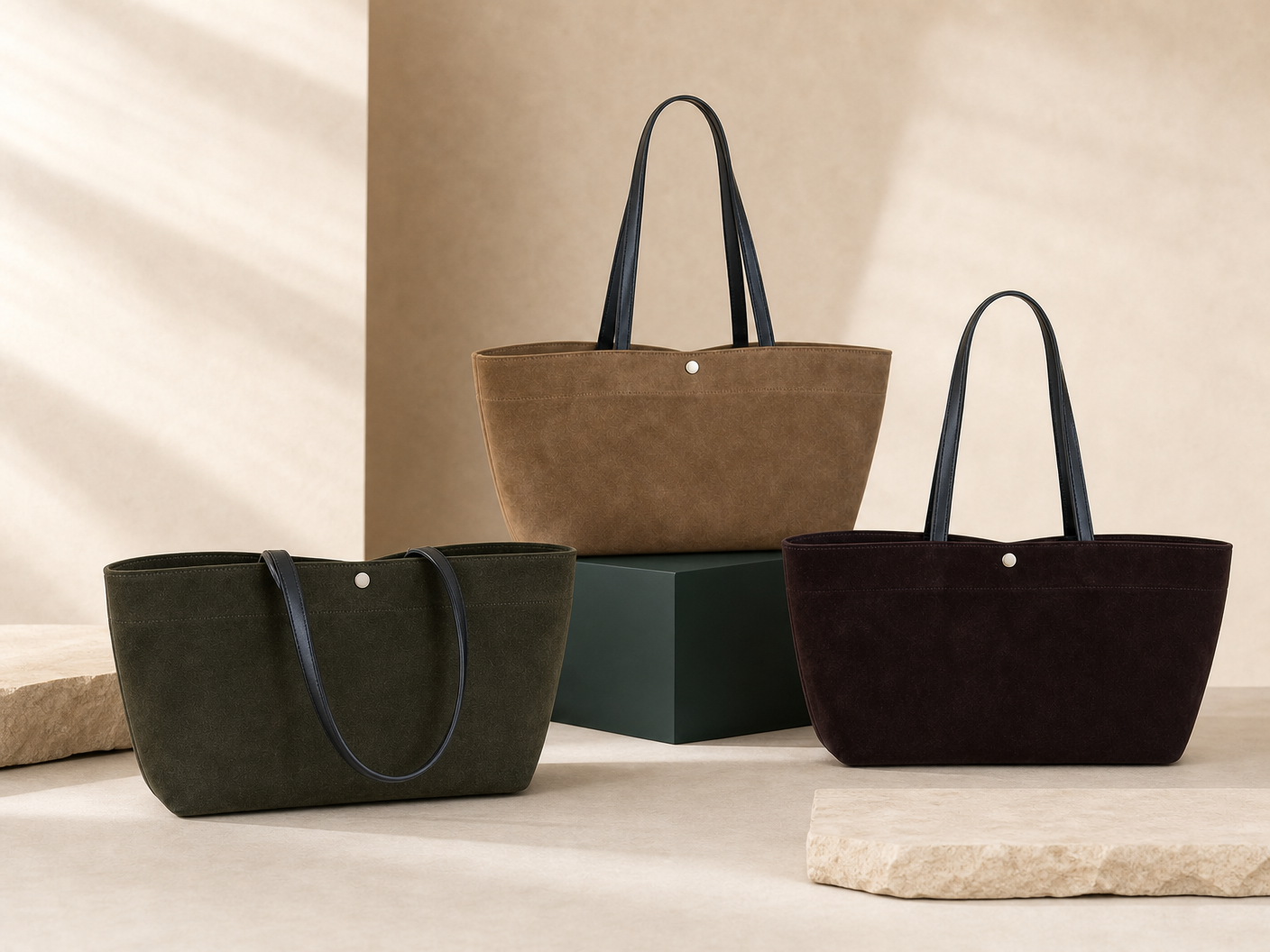
Construction and reinforcement implications
Wider openings and heavier loads increase the importance of handle attachment, base support and edge control.
Reinforcement should support the intended shape without making a soft bag feel rigid. The specification should identify where structure is required and where drape is part of the design.
- Review handle anchors from inside and outside.
- Confirm whether the base should stand or collapse.
- Match lining weight to the planned load and body material.
Collection-positioning checklist
Choose one silhouette as the collection anchor and use the others only when they serve a different use case or price role.
Too many similar carry-all shapes divide demand and create unnecessary SKU overlap. A disciplined range can vary scale or closure while sharing materials and visual details.
- Give each silhouette a distinct use occasion.
- Share hardware and colors where coordination adds value.
- Remove variants that differ only by naming.
Decision tool
Shopper, tote and bucket tote compared
| Dimension | Shopper bag | Tote bag | Bucket tote |
|---|---|---|---|
| Typical emphasis | Open carry volume | Flexible category with varied structure | Depth and soft sculptural volume |
| Opening | Often broad and open | Open, zipped or shaped | Narrower top, sometimes tied or snapped |
| Structure | Usually soft to semi-structured | Ranges from soft to structured | Often soft with controlled base support |
| Collection role | Retail-friendly carry-all | Core everyday or work style | Fashion-led volume option |
Before you brief a supplier
Buyer checklist
- Use occasion and expected load
- Opening and security requirement
- Base and handle reinforcement
- Clear role beside other carry-all styles