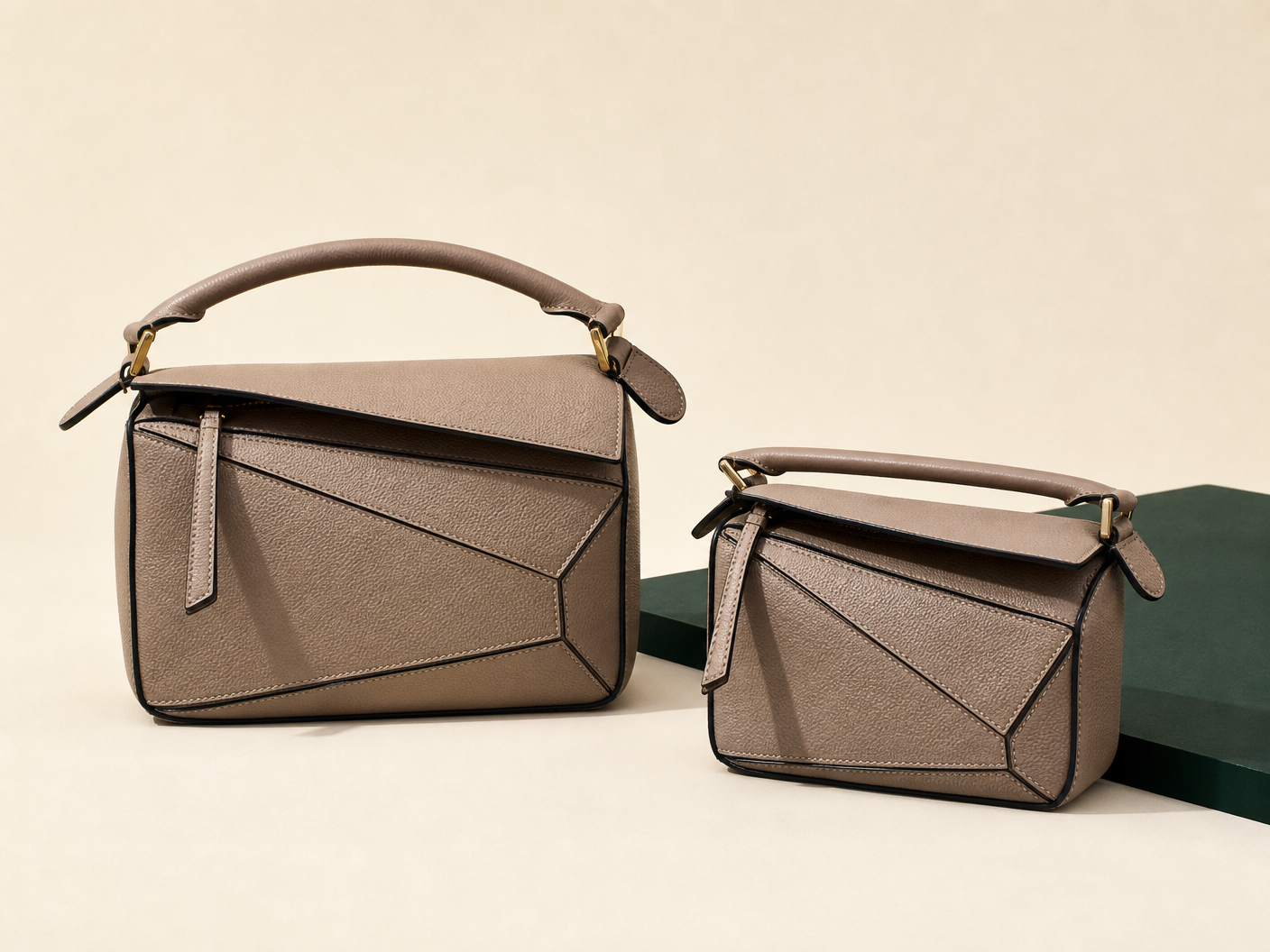
Do not decide the category from strap length alone. Test the complete relationship between body scale, strap drop, adjustability and access while worn.
Use this guide alongside Shoulder and crossbody collection when choosing the initial direction. The Hardware and construction planning page covers the next specification or development layer.
Carry mode and strap comparison
Crossbody straps need enough adjustable range for different bodies and clothing layers. Shoulder straps prioritize underarm clearance and a stable shorter drop.
A convertible style must work in both modes without leaving excessive strap tail or distorting the body. Define the primary mode even when a second mode is offered.
- State minimum and maximum usable strap drop.
- Test over light and heavier clothing.
- Confirm how excess adjustable strap is managed.
Capacity and access requirements
Higher shoulder carry can limit opening access, while crossbody carry can make the bag move during use.
Opening direction, zipper pull position and flap behavior should be tested while worn. Capacity must remain proportional to the strap and anchor system.
- Test one-handed access in the primary carry mode.
- Keep the opening clear of strap attachments.
- Check that the filled bag does not rotate or tip.

Hardware and structure implications
Crossbody anchors handle a longer leverage path, while shoulder straps can concentrate force near the top edge.
Reinforcement should follow the actual load path into the body. Hardware scale and weight must also match a compact bag so the product does not feel visually or physically top-heavy.
- Inspect anchors inside the lining or facing.
- Match ring and hook scale to the body.
- Confirm detachable hardware cannot twist into the opening.
Assortment decision checklist
Use crossbody for hands-free movement and shoulder bags for a closer, often more fashion-led carry position.
A collection can include both when the products solve different use occasions. Avoid duplicating the same body with minor strap changes unless convertibility is a deliberate platform strategy.
- Define the primary wearing occasion.
- Compare capacity and access, not only styling.
- Give convertible products a clear primary identity.
Decision tool
Crossbody and shoulder bag comparison
| Dimension | Crossbody bag | Shoulder bag |
|---|---|---|
| Carry path | Diagonal across the body | Higher on one shoulder |
| Strap requirement | Longer, often adjustable | Shorter drop with underarm clearance |
| Access test | Stability while opening at the hip | Clear opening under or beside the arm |
| Collection role | Hands-free everyday or travel use | Close-carry day-to-evening styling |
Before you brief a supplier
Buyer checklist
- Primary carry mode
- Usable strap range
- Opening access while worn
- Anchor reinforcement and hardware scale