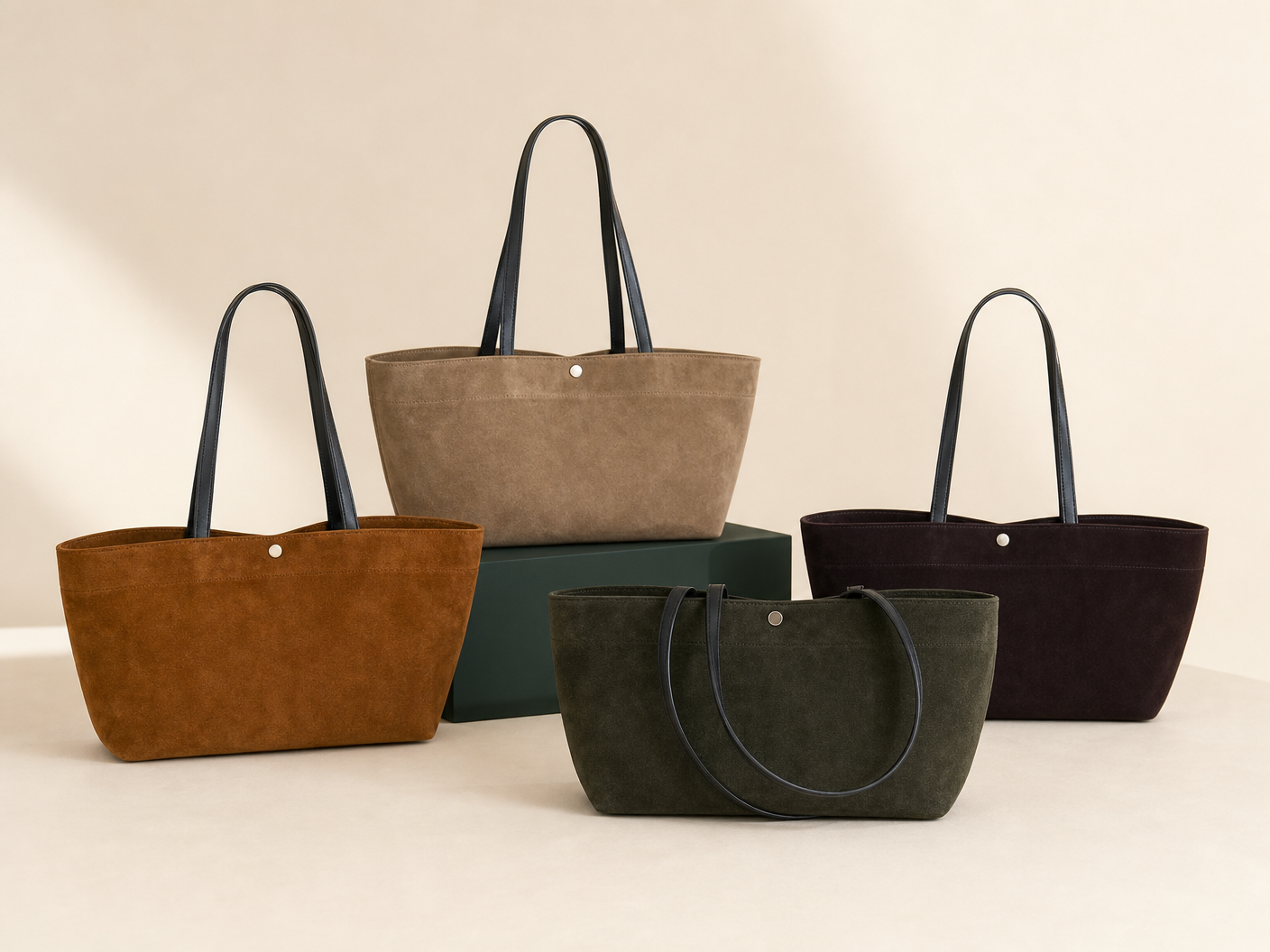
Keep a size only when buyers can understand its different purpose. If two sizes serve the same use case, one of them is probably unnecessary.
Use this guide alongside Tote and shopper bags when choosing the initial direction. The Material planning page covers the next specification or development layer.
Define the buyer and use case for each size
Compact, medium and large should each solve a different carry problem.
A compact tote may support short trips and lighter loads. A medium can serve everyday use. A large may target work, travel or high-volume shopping, which changes reinforcement and comfort needs.
- Write a one-sentence job for every size.
- List expected contents before setting dimensions.
- Check whether the channel needs all three sizes.
Build a size ladder from capacity and proportion
Scale the silhouette deliberately; do not enlarge every dimension by the same percentage.
Handle drop, opening width, base depth and body height affect usability differently. A large tote may need more base depth and stronger anchors without an equally large increase in handle drop.
- Use physical or paper volume mockups.
- Keep recognizable family proportions.
- Review the side profile, not only the front view.
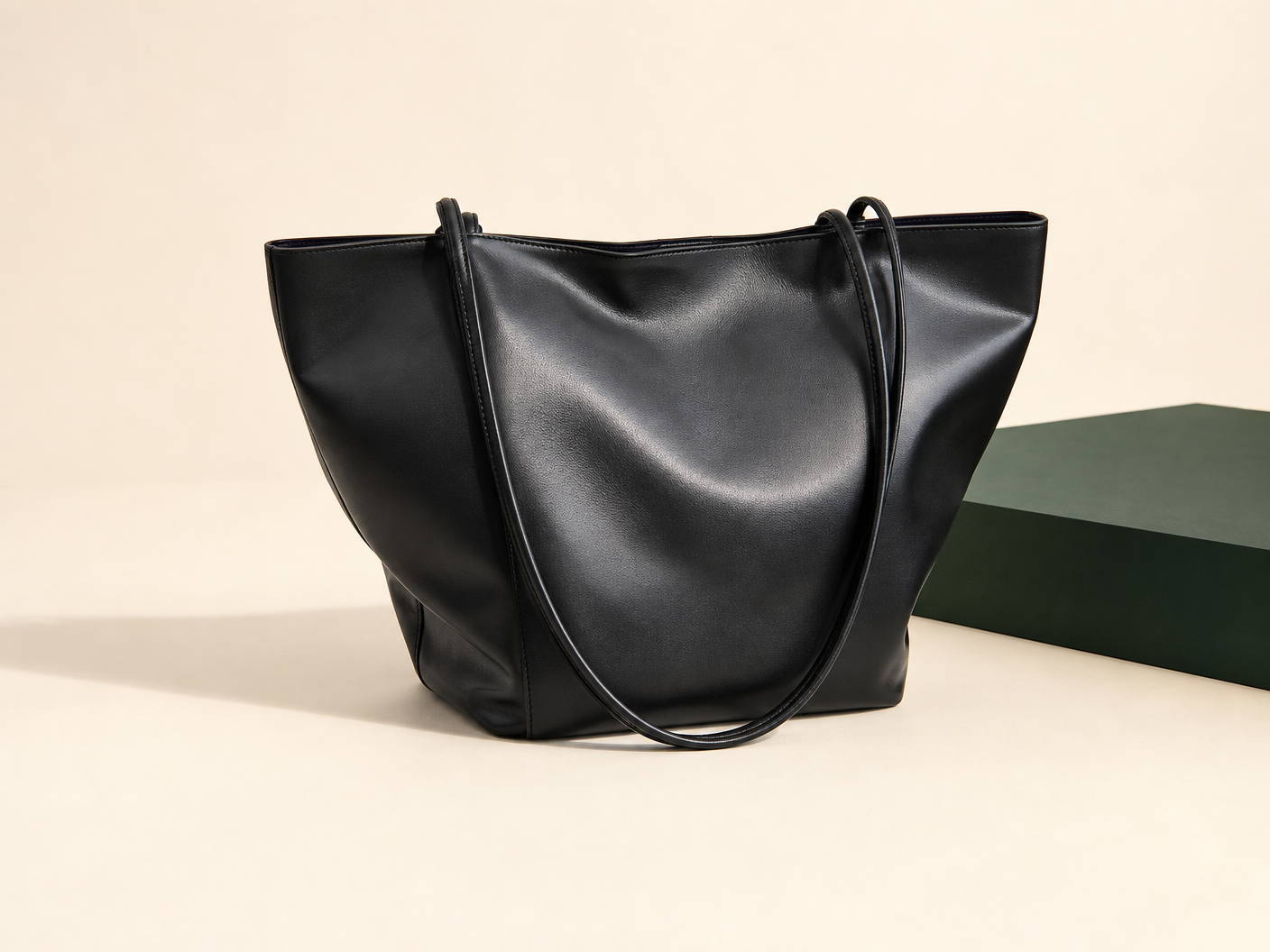
Share construction and material decisions
A coordinated size range should reuse components where that does not reduce performance.
Shared material, lining, hardware finish and branding create a clear family. Reinforcement can change by size because the expected load changes.
- Standardize visual hardware before structural hardware.
- Set size-specific reinforcement zones.
- Confirm whether one material weight works across the range.
Rationalize color and SKU count
Do not multiply every size by every color automatically.
Use core colors across the strongest sizes and reserve accent colors for the size most likely to carry fashion risk. This keeps the range readable and reduces overlapping inventory decisions.
- Assign core, support and accent roles to colors.
- Review size-color combinations as one matrix.
- Remove combinations without a distinct buyer case.
Decision tool
Example tote size-role ladder
| Range role | Primary use | Construction focus |
|---|---|---|
| Compact | Light daily carry or fashion-led use | Proportion, access and strap comfort |
| Medium | Broad everyday use | Balance of capacity, organization and weight |
| Large | Work, travel or high-volume carry | Base support, anchors and comfortable handle drop |
| Accent size | Seasonal or channel-specific test | Controlled SKU exposure and shared components |
Before you brief a supplier
Buyer checklist
- Distinct job for every size
- Capacity test with realistic contents
- Shared family details and size-specific reinforcement
- Size-by-color SKU matrix